
The Art of the Field Trip

AUTHOR | Sara Loretta
PUBLISHED | February 2026
There's a specific kind of creative exhaustion that happens when you spend too many months in the same physical loop. Home to coffee shop to coworking space. Desk to meeting to desk. Screen to screen to screen.
Your output stays consistent, but your thinking gets narrow.
You're still productive…technically. But the work starts to feel like you're remixing the same three ideas in slightly different formats. The spark that made your work feel alive six months ago has quietly dulled into competence.
This isn't burnout. It's input deprivation.
And the fix isn't another productivity hack or morning routine tweak. It's simpler than that: you need to go somewhere.
Not on vacation. Not to scroll a different Instagram feed from a different couch. But to actually move through physical space, see something new, and let your brain make connections it can't make when it's stuck in the same visual loop.
You need a field trip.
FIELD TRIPS AREN’T JUST FOR KIDS
When you were in school, field trips were the best days. Not because you got to skip class (though that helped), but because suddenly the world felt bigger. The museum, the factory tour, the planetarium; these weren't just fun diversions. They were proof that learning happened outside of textbooks. That context mattered. That seeing something in real life changed how you understood it.
Somewhere between elementary school and professional life, we decided that field trips were frivolous. That "serious work" happened at desks. That inspiration was something you squeezed in during lunch breaks or weekends, if you had the energy.
But the creatives, strategists, and builders doing the most interesting work haven't stopped taking field trips. They've just rebranded them.
They call them "research days." Or "inspiration hunts." Or "getting out of the office." But what they're really doing is the same thing you did in third grade: stepping into a different context to see what ideas show up when the environment changes.
Because here's the thing about creativity: it doesn't happen in a vacuum. It happens at the intersection of what you know and what you notice. And you can't notice new things if you're looking at the same four walls every single day.
WHAT HAPPENS WHEN YOU STAY IN THE SAME LOOP TOO LONG
Let's be honest about what most people's weeks look like:
Monday: desk, meetings, laptop.
Tuesday: desk, meetings, laptop.
Wednesday: desk, meetings, laptop.
Thursday: same coffee shop, same seat, same laptop angle.
Friday: if you're lucky, maybe a different room in your house.
Your physical environment becomes so predictable that your brain stops registering it. You're not seeing your space anymore. You're just existing in it.
And when your environment becomes invisible, your thinking becomes automatic.
You default to the same frameworks. You reach for the same references. You solve problems the way you've always solved them, because nothing in your immediate environment is prompting you to think differently.
This isn't laziness. It's just how brains work. We're pattern-matching machines. And when the patterns stay the same, the outputs stay the same.
That's why the best idea you had last month probably didn't happen during your morning standup or your afternoon deep work block. It happened in the shower. Or on a walk. Or in a conversation with someone outside your industry.
It happened when your brain was somewhere else.
THE CASE FOR STRUCTURED EXPLORATION
Most people treat inspiration as something that happens accidentally. You stumble into it at a bookstore. You overhear something at a coffee shop. You see something on a walk that sparks an idea.
And that works…sometimes. But relying entirely on accidental inspiration is like relying on accidental revenue. It might happen. But you can't build a sustainable practice around it.
The people whose work stays fresh, whose ideas feel generative instead of recycled, aren't just luckier. They're more intentional about inputs.
They don't wait for inspiration to find them. They go looking for it.
That's what a field trip is: structured exploration. Deliberate exposure to something outside your usual loop. A decision to spend a few hours (or a full day) seeing, experiencing, or learning something that has nothing to do with your immediate to-do list.
It's not a break from work. It's a different kind of work. The kind that feeds everything else.
WHAT COUNTS AS A FIELD TRIP
A field trip isn't a vacation. It's not a weekend getaway or a week off. It's a few focused hours in a context that's meaningfully different from your default.
Here's what qualifies as a field trip:
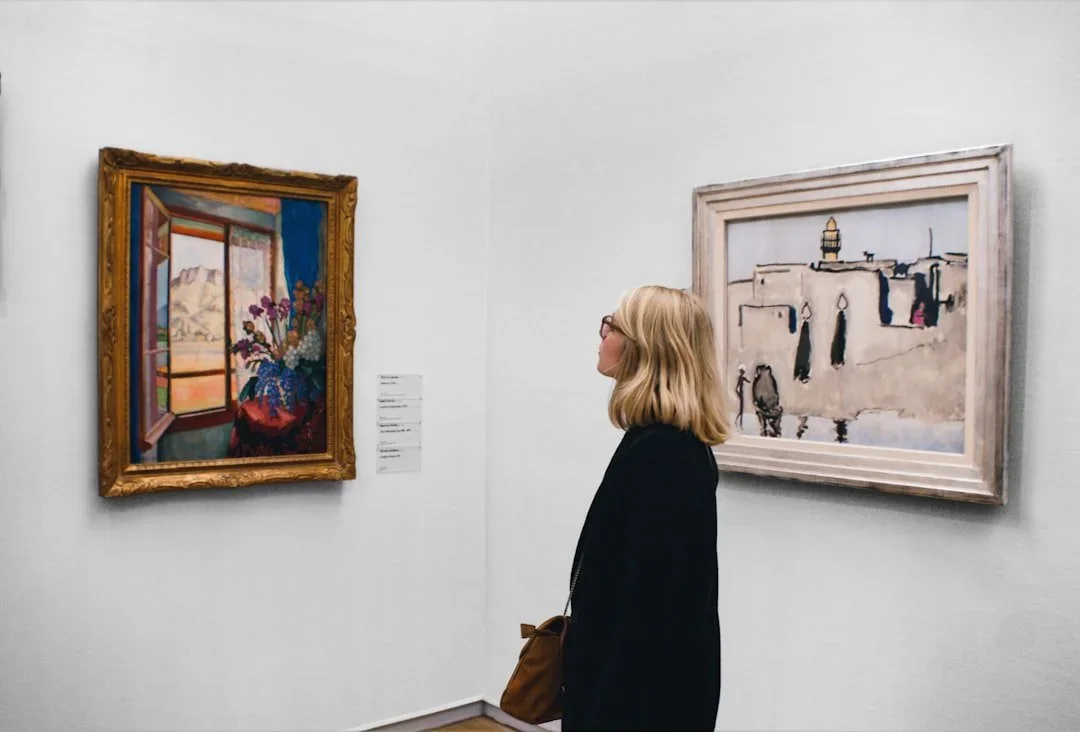
Museums and galleries. Not because you're an art person (though maybe you are), but because museums are designed to make you look closely. They slow you down. They force you to notice details. That habit of attention transfers.
Live events. Concerts, theater, comedy shows, poetry readings. Anything where humans are performing in real time. The energy of a live audience, the unpredictability of a live performance — it reminds you that creative work is meant to be experienced, not just produced.
Different industries. Spend a morning at a farmer's market. Tour a factory. Sit in on a city council meeting. Watch a different profession in action. You'll see systems, rhythms, and problems that mirror your own work in surprising ways.
New neighborhoods. Walk through a part of your city you've never explored. Notice the architecture. The signage. The way people move through space. Urban design is full of lessons about flow, attention, and experience.
Conferences and talks. Not the ones in your industry (those are professional development, not field trips). Go to a conference about something adjacent. Something curious. Something that makes you think, "I wonder what they're solving for."
Bookstores and libraries. Not to buy the productivity book everyone's talking about. But to wander. To see what catches your eye in the architecture section, the science section, the kids' section. To let randomness guide you.
Workshops and classes. Pottery. Printmaking. Woodworking. Anything hands-on that uses a completely different part of your brain. The act of making something physical recalibrates how you think about making anything at all.
The common thread: these are all experiences that pull you out of your default context and put you somewhere that makes you pay attention differently.
THE QUARTERLY RHYTHM THAT ACTUALLY WORKS
If you wait until you "have time" for a field trip, it'll never happen. There's always another deadline. Another client call. Another urgent thing.
That's why it needs a structure. Not a rigid one, but a rhythm you can count on.
Once a quarter works.
It's frequent enough that you're regularly injecting new inputs into your thinking. But it's spaced enough that it doesn't feel like another obligation crushing your calendar.
Four field trips a year. Roughly one every twelve weeks. It's manageable. It's measurable. And it's transformative if you actually do it.
Here's what a quarterly field trip rhythm looks like in practice:
Q1 (January–March): The Reset Field Trip Start the year by seeing something that reminds you why your work matters. A museum exhibition. A theater performance. Something that reconnects you to the bigger context of what you're building.
Q2 (April–June): The Adjacent Industry Field Trip Go see how a completely different field solves problems. A design conference if you're a writer. A food festival if you're a strategist. A maker fair if you're a consultant. Notice what transfers.
Q3 (July–September): The Hands-On Field Trip Make something physical. Take a printmaking class. Try ceramics. Build something with your hands. Let your brain remember that creation doesn't always happen on a screen.
Q4 (October–December): The Exploration Field Trip Wander. Explore a new neighborhood. Visit a place you've been meaning to go. Let curiosity lead. No agenda, just noticing.
You don't have to follow this exact structure. But having a rhythm — any rhythm — means you're not leaving inspiration to chance.
HOW TO ACTUALLY MAKE IT HAPPEN
The logistics are simpler than you think:
Block the time like it's a client meeting. Treat it as non-negotiable. If a field trip is on the calendar, it stays on the calendar.
Set a budget. Field trips don't have to be expensive, but they're easier to commit to if you've already decided how much you're willing to spend. $50–$100 per quarter is usually enough for a museum ticket, a class, or an event. And most museums have dedicated free visit days, so check their calendar!
Go alone (usually). Field trips with friends are fun, but you're trying to think differently, not catch up. Solo field trips let you follow your own curiosity without compromise.
Bring a notebook, but don't force it. You're not there to take notes like it's a workshop. You're there to absorb. But having a place to jot down a passing thought or sketch something that caught your eye helps the ideas stick.
Follow the energy. If something's boring, leave. If something's fascinating, stay longer. The point is to be present, not to prove you did the thing.
Reflect afterward, not during. Don't try to extract insights in the moment. Let the experience sit for a day or two. Then spend 15 minutes writing about what stood out. That's when the connections show up.
WHAT CHANGES WHEN YOU DO THIS CONSISTENTLY
When you build a quarterly field trip practice, something shifts.
Your work doesn't just stay fresh, it starts to pull from a wider set of references. Your ideas stop feeling recycled because you're actively feeding your brain new material.
You stop defaulting to the same solutions because you've seen how other people, industries, and contexts solve similar problems differently.
You feel less stuck because you've reminded yourself that the world is bigger than your laptop screen. That inspiration isn't scarce. That you can go find it whenever you need it.
And the work you make starts to feel more alive. Not because you're trying harder, but because you're pulling from a richer set of inputs.
THE PERMISSION YOU’VE BEEN LOOKING FOR
If you're reading this and thinking, "That sounds nice, but I don't have time", that's exactly why you need it.
The busier you are, the more critical it becomes to step out of the production loop and into a different context. Because without that break in pattern, you're just going to keep making the same thing in slightly different packaging.
A field trip isn't an indulgence. It's infrastructure.
It's how you make sure your work doesn't calcify. How you stay curious instead of just competent. How you build a creative practice that's fed by the world instead of depleted by the grind.
Four times a year. Twelve weeks apart. Go somewhere. See something. Let your brain make connections.
Your best ideas are out there. You just have to go find them.
